Material or artwork proof
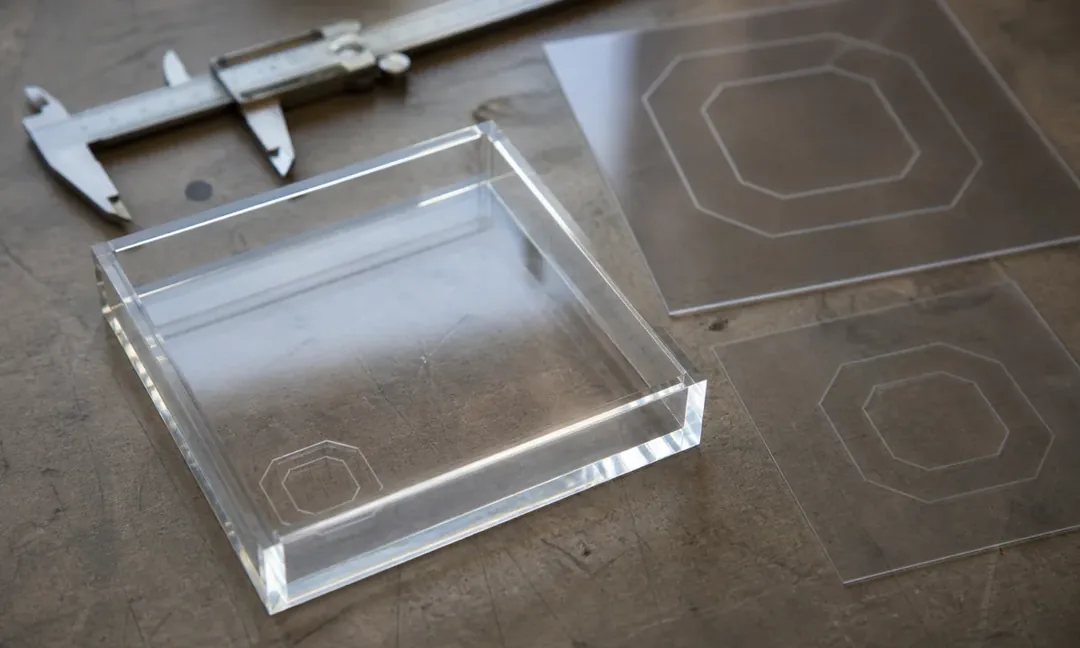
Use a sheet coupon, color target or printed proof when the open decision is appearance rather than full assembly.
CNC machining, laser engraving, UV printing, clear-coat seal, lamination and assembly for custom mahjong tiles, personalized mahjong sets and blank tiles — from 50 sets per design.
USMJ is a custom acrylic manufacturer for B2B mahjong programs. We turn buyer-approved sketches, photos, CAD files and artwork into custom mahjong sets, display and travel cases, racks and pushers, and accessories. Personalized mahjong sets for weddings, member clubs and corporate gifts can carry monograms, logos on the tile backs or your own Joker artwork. Paid tile samples run $40–80 and normally take 5–7 days, and standard production takes 15–20 days after approval.
ISO 9001 QMS · 3,000 m² Factory · MOQ 50 Sets/Design · 15–20 Day Production
Send a sketch, photo, CAD file or dimensioned reference to start.
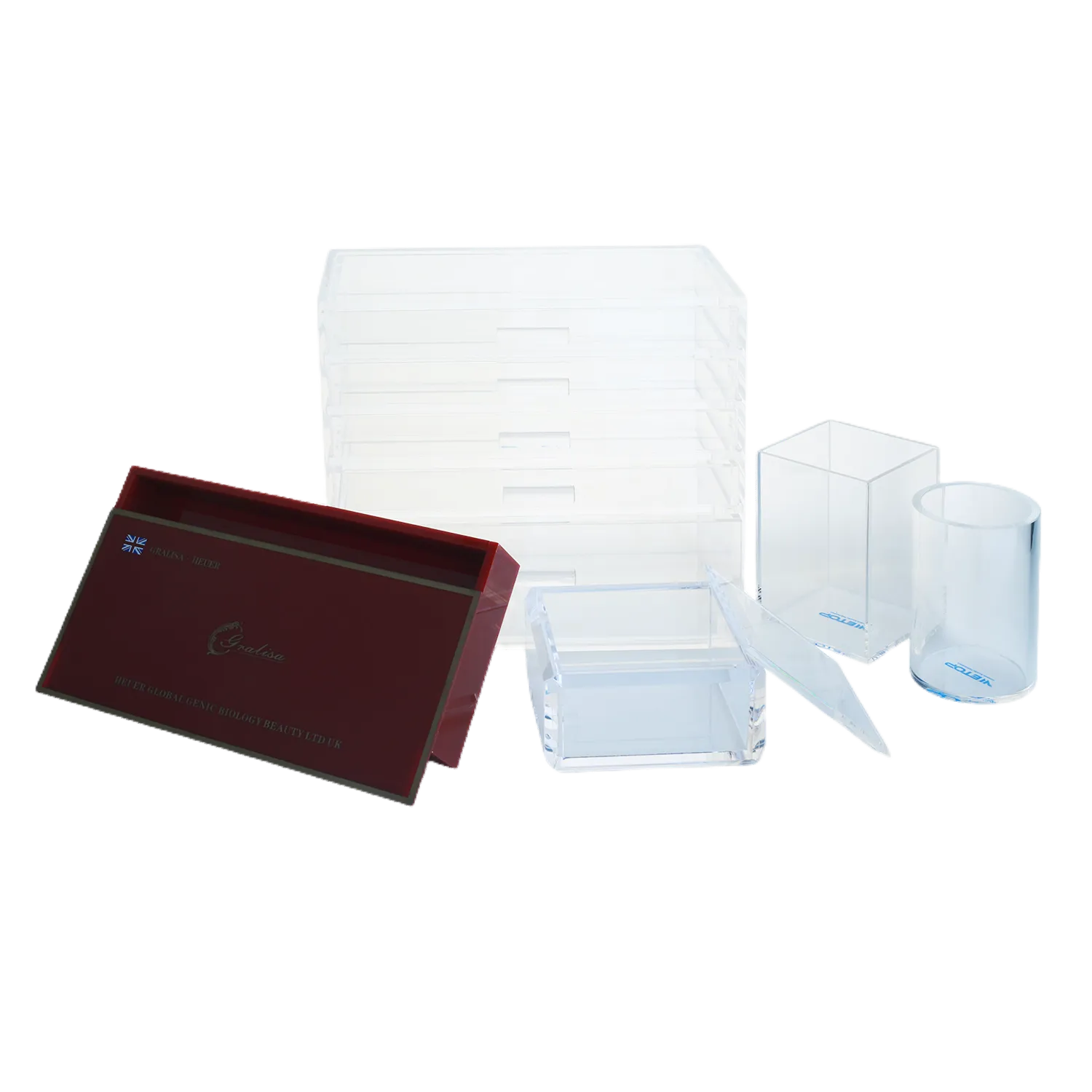
Paid tile samples normally take 5–7 days at $40–80; full set samples run $180–320 in about 7 days. Sample fees are paid separately and never credited. Production timing starts after the drawing, artwork, sample and agreed payment gate are approved.
Send whatever input you have, approve a production-grade sample, then release the confirmed file to bulk production. USMJ can start a custom mahjong program from a sketch, photo, or CAD file; tile samples normally take 5–7 days and production takes 15–20 days after approval.
Share a sketch, reference photo, or design file. Include approximate size, quantity, material preference, and any branding. No CAD needed.
We reply with a written quoteWe build the agreed production-intent sample after drawing and artwork review. The sample record names the material, finish, printing, construction and acceptance points that will control the production release. Sample fees are paid separately and are never credited to production orders.
Sample ready in 5–7 daysEvery piece passes 100% inspection against your approved sample. Ships FOB Shenzhen; CIF and DDP available.
Production in 15–20 daysThese are the three buyer-side gates. For the detailed factory process behind each order, see our manufacturing process page.
A sample should close a named risk before production. We quote the smallest sample scope that can prove the material, appearance, fit, construction or packout decision holding up the order. Every physical sample is paid separately and never credited to production.
Use a sheet coupon, color target or printed proof when the open decision is appearance rather than full assembly.
Use a representative part when the decision is slot clearance, mating geometry, edge finish, printing or engraving.
Use one finished unit with the approved material, construction, branding and packing when the complete product must be signed off.
What you receive: the agreed physical sample, process or artwork confirmation, approval photos or video before dispatch, and a recorded revision for the production file.
Timing: standard tile samples normally take 5–7 days after the brief and payment are approved. Full set samples and multi-material programs are quoted separately.
After approval: the released sample and files become the production reference. Standard production normally takes 15–20 days after approval.
Every branding method produces a different visual effect. Choosing the route depends on color count, design complexity, surface, approval method and budget. The comparison below applies each process to the same logo area.
| Method | Effect | Typical Use | Colors | Durability | Cost |
|---|---|---|---|---|---|
| Silk-Screen | Solid color, sharp edges, vibrant | Logos, text, 1–3 color graphics | 1–6 per pass | Very high (abrasion-resistant) | Low |
| UV Printing | Photo-quality, full-color, gradients | Complex artwork, portraits, full-bleed designs; for second-surface tray work, use the artwork and sample checklist | Full CMYK | High (UV-cured) | Medium |
| Hot Stamping | Metallic sheen in gold, silver or rose gold | Premium brand logos, collector-edition tiles | 1 foil per pass | High | Medium-high |
| Laser Engraving | Permanent etch, tactile texture, frosted look | Serial numbers, fine text, anti-counterfeit marks | No color (etched) | Permanent | Low |
| Vinyl Graphics | Pre-cut or printed adhesive decal, smooth surface finish | Signage, case labels, temporary branding | Full color (printed) or solid (cut) | Medium (removable/replaceable) | Low |
Send the artwork, color target and visible-surface requirement. We will propose a process and quote the required proof or printed sample. For tray programs, the tile engraving and printing steps separates laser engraving, UV printing and clear-coat seal by durability and artwork-change needs.
Edge quality and assembly technique affect appearance, fit and handling. The drawing and approved sample identify the selected finish and joining method.
Cast acrylic (PMMA) is the usual starting material for our fabrication work. We quote clear, colored, frosted, mirrored and specialty sheets by named grade and supplier availability. When a project requires a brand-color match, the quote and approval record identify the physical target, sheet grade, print method and viewing conditions.
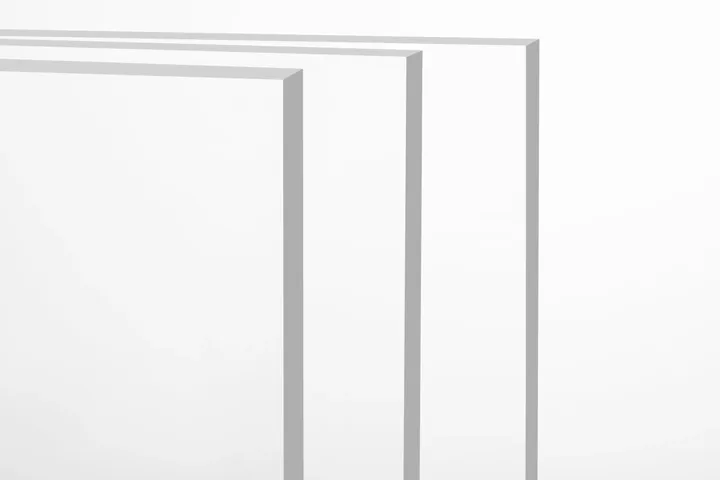
Transparent sheet for products where visibility and edge appearance matter; the selected grade is named in the quote.
Typical use: clear tile bodies, case walls, pushers
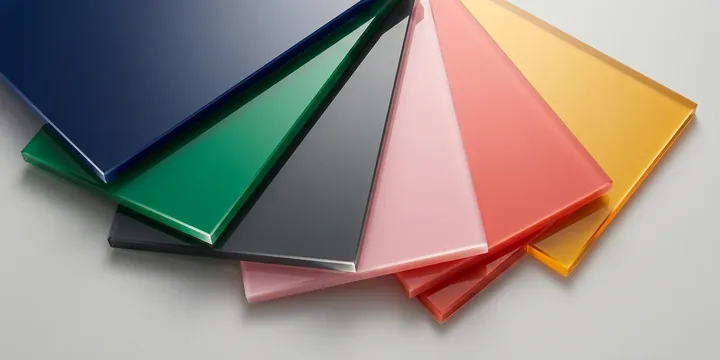
Standard colors plus custom brand-color matching against an approved physical sample.
Typical use: brand-color tile sets, colored racks and pushers
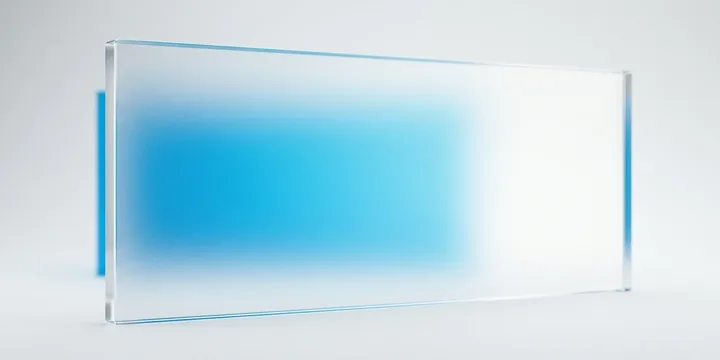
Diffused or matte appearance approved against a named sheet and physical sample.
Typical use: frosted tile backs, diffused case panels
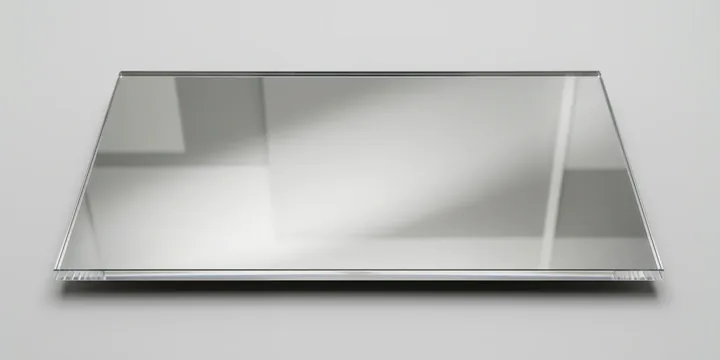
Reflective surface, lightweight alternative to glass mirrors.
Typical use: mirror-accent case lids, retail display bases
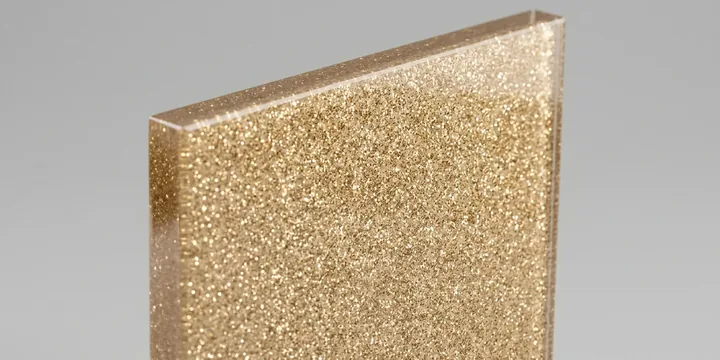
Embedded sparkle particles for eye-catching visual effects.
Typical use: boutique-edition tiles, gift-set accents
Specialty grades are available for projects that need reduced UV exposure; wavelength performance is confirmed from the selected sheet's supplier data.
Typical use: long-term display cases, club display walls
For details on laser cutting, CNC machining, polishing and the other factory steps, see our manufacturing process.
Material specifications, optical properties and mechanical data for USMJ cast acrylic sheet. Request it through our contact page and we will email it to you.
Cutting, CNC machining, polishing, bending, printing, assembly and inspection run under one roof in our 3,000 m² Shenzhen facility. These are the core processes used to turn cast PMMA sheet into finished mahjong products. For the step-by-step view, see our mahjong manufacturing process.
Drawing-controlled 2D profiles, slots, windows and registered cut paths for production parts from 50 sets per design. Review the laser-cutting service workflow.
Drawing-controlled routing, drilling, pockets and stepped geometry for production parts from 50 sets per design. Review the CNC service workflow.
Diamond, flame or cloth polishing selected by edge geometry, named material and the approved appearance sample. Compare polishing routes.
UV print, silk-screen, foil and engraving routes selected by artwork, color, surface, quantity and the approved proof. Compare branding methods.
Line-bent angles and formed curves released against the buyer drawing, named sheet and approved sample.
Bonding, specified hardware, labeling and protective packing controlled by the released sample and inspection record. See the quality-control workflow.
| Process | What It Does | Tolerance / Spec Notes | Typical Applications |
|---|---|---|---|
| CNC Machining | 3D shaping, routing, drilling, pockets and stepped geometry | Drawing-specific limits and inspection method confirmed before sampling | Frames, blocks, tray inserts, precision-fit bases |
| Laser Cutting | Flat-sheet profiles, complex curves, fine detail | Profile limits, edge acceptance and register controlled by drawing and cut sample | Tile blanks, case panels, rack bodies |
| Line Bending & Thermoforming | Heat-bent angles and formed curves without joints | Material, bend line, radius and appearance released against a sample | Case lids, curved case panels |
| Solvent Bonding | Joins compatible panels into a bonded assembly | Joint design, visible zone and acceptance sample control the route | Boxes, display cases, permanent assemblies |
| Diamond & Flame Polishing | Changes the appearance and texture of cut edges | Edge geometry, material and approved appearance sample control the route | Display cases, tile sets, racks |
| UV Printing | Full-color graphics printed directly on acrylic | Artwork, surface, color target and proof determine the quoted print setup | Branded displays, artwork panels, multi-design batches |
| Laser Engraving | Creates a frosted mark in the acrylic surface | Use a proof to approve mark depth, legibility and appearance | Logos, serial marks, anti-counterfeit features |
| Pantone Color Matching | Custom-colored sheet matched to your brand color | Matched against an approved physical target; proofing method and any setup charge are stated in the quote | Brand programs, corporate colors, retail fixtures |
Most sheet-fabricated orders carry no mold-tooling fee. The quote identifies any CNC programming, cut-test, print-screen, jig, or proofing setup before you approve the sample. Every setup line is itemized in the quote, separate from the unit price.
Each card shows a buildable customization route and the control method behind it. These are planning routes, not claims about a completed customer shipment.
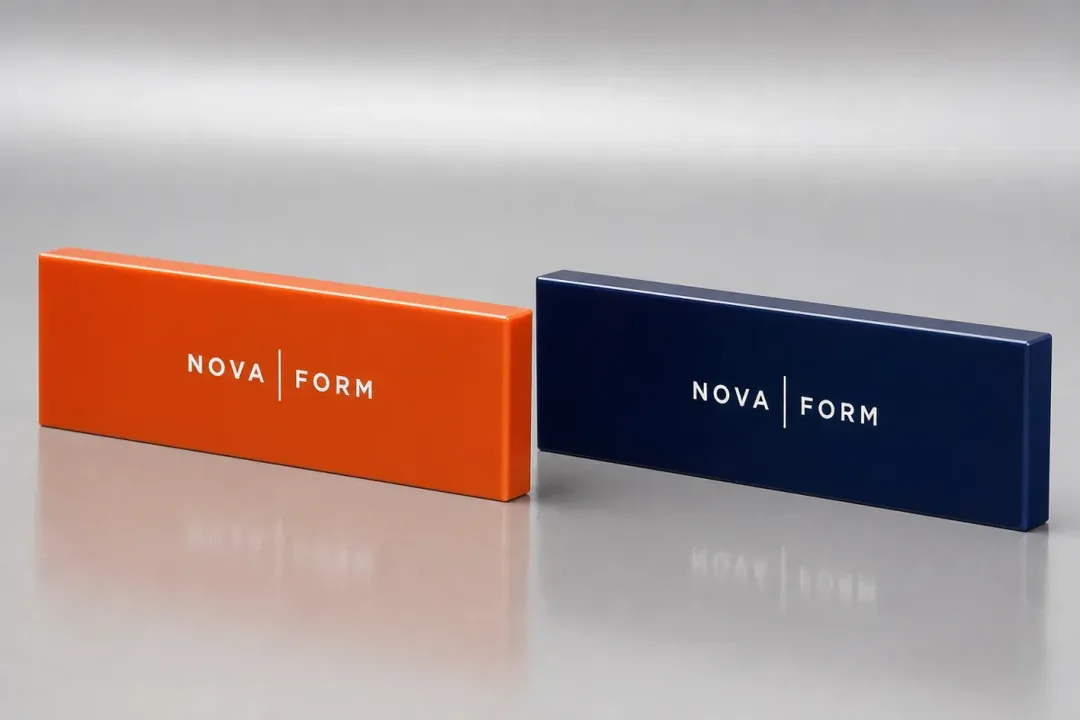
A brand logo has to sit on every tile back at the same position and depth across the whole set.
Control methodArtwork, proof, engraving depth and position stay linked to the approved sample and the released artwork revision.
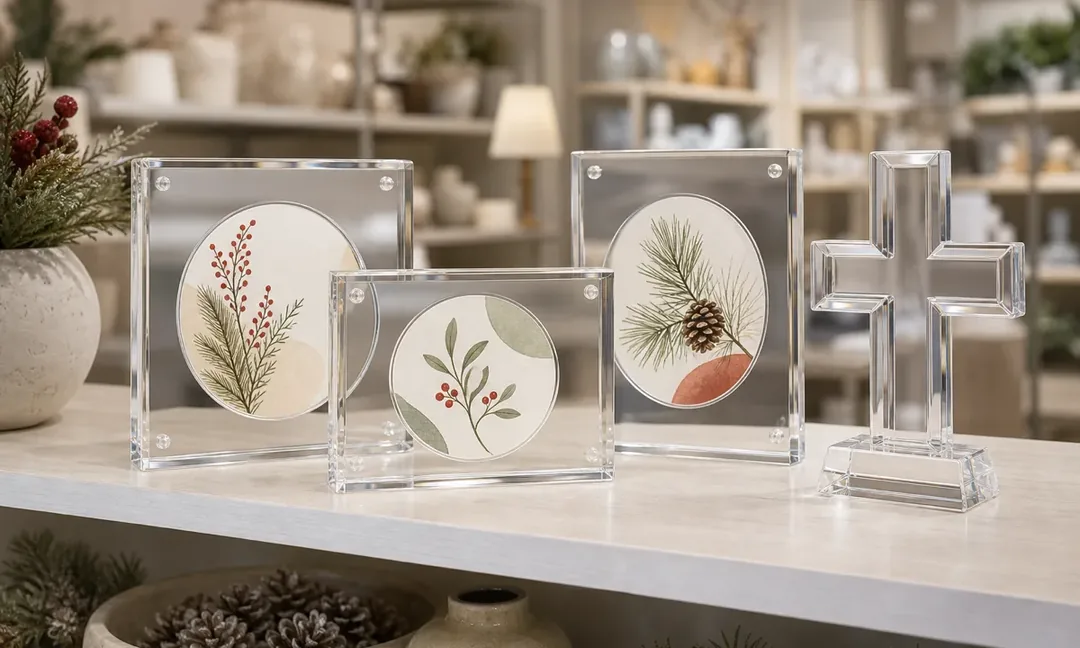
Seasonal or campaign Joker artwork has to change without disturbing the approved tile geometry and color target.
Control methodThe approved tile dimensions, color target and artwork revision stay visible in the order record between runs.
A multi-colorway launch needs each color picked from the in-stock cast PMMA range and locked before production.
Control methodEach colorway is proposed from the in-stock sheet range against your Pantone or hex target and locked on the approved physical sample.
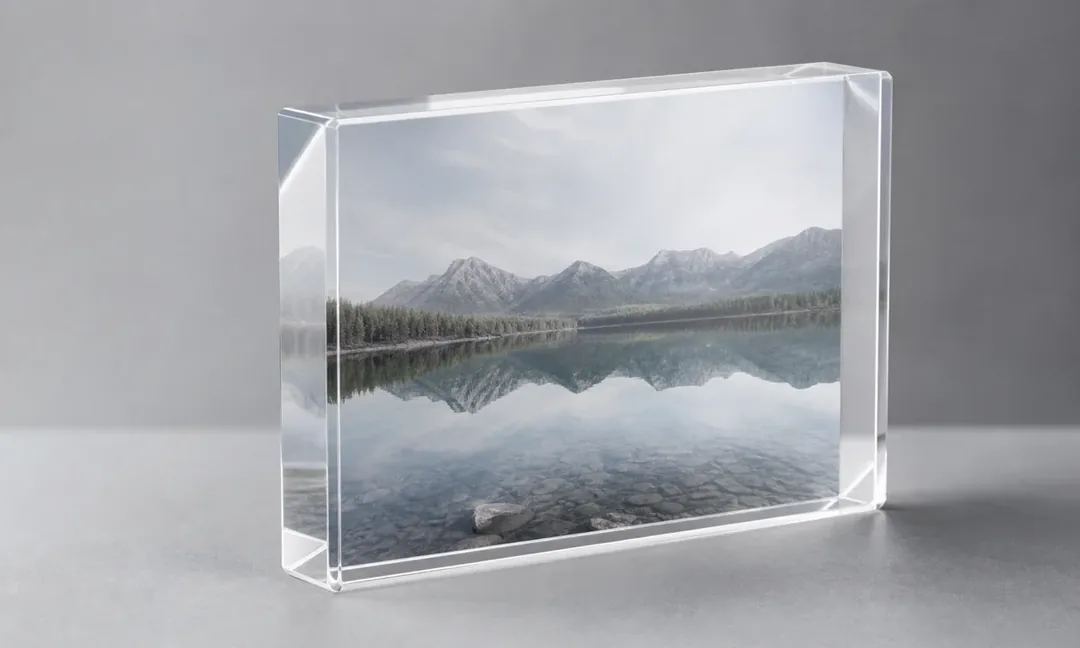
A retail or gift program needs printed packaging that protects the set and matches the brand.
Control methodSleeve, insert and carton specifications are released together with the tile drawing so the packout is checked on the sample.
Send your reference set, drawing or sketch. We will identify the closest process route and the decisions needed before sampling.
Quote a Customization ProgramUSMJ runs cutting, CNC machining, polishing, bending, printing, assembly and inspection in one 3,000 m² Shenzhen facility with 50+ staff. One released file set can therefore control the drawing, artwork, sample, production and inspection record without passing the specification between unrelated suppliers.
| Factor | Outsourced Model | USMJ In-House |
|---|---|---|
| Communication | You → Factory → Subcontractor → Factory → You | You → USMJ (one contact, one thread) |
| Sample Speed | Depends on the schedules and handoff rules of each supplier | Standard paid tile sample target: 5–7 days after approval |
| Quality Control | Different standards at each stop | In-house process and project records under one documented quality system; verify the requested scope with the quality-control checklist |
| Design Changes | Change one parameter → re-coordinate with all subcontractors | One revision record can be reviewed across the affected processes |
| Cost Structure | Each supplier quotes its own scope and handoff | One quote identifies material, process, setup, packing and shipping scope |
Ask who owns the released drawing, where each process is performed, how revisions reach the floor, what the sample approves, and which inspection record will travel with the order. The quality-control checklist turns those questions into an evidence request.
Six factors determine a custom fabrication quote: size, material, quantity, finishing, complexity and packaging. The price is calculated against the released specification, so the quote can show which input moves the number.
Material use changes with the finished envelope, sheet layout, thickness and whether the product is cut as one part or assembled from several panels.
Clear cast acrylic is the baseline. Colored, frosted, mirrored, and UV-filtering sheets carry supplier- and grade-specific premiums, which we identify in the material line of the quote.
The biggest single cost lever. Programming and setup costs spread across more units. At the 50-set production floor, setup is a meaningful part of unit cost; at 500 sets it is much smaller. Published FOB Shenzhen references for a standard-spec engraved set are $58 at 50 sets, $56 at 100, $50 at 200, $49 at 250, and $47 at 500. Reference only · FOB Shenzhen · confirmed on your written quote.
Artwork, color count, print coverage, proofing, edge route and visible-surface requirements determine the quoted finishing setup and unit work.
Part count, bonding, formed geometry, hardware pockets, fit checks and inspection scope determine the production sequence and labor in the quote.
Bulk packing, retail boxes, foam inserts, labels and pallet requirements are quoted against the final packout. FOB Shenzhen and DDP can be shown as separate scopes for factory-price and landed-cost review.
If the project combines several cost drivers, send the current brief and target quantity tiers. We will identify the input that moves the quote most.
Get Your Project Quotewritten quotes are issued against your actual target quantityYes. Start with a sketch, reference photo or rough description. Add dimensions, quantity, material preference and branding details. Our engineering team creates a production drawing for approval before fabrication begins. If you already have production CAD, send DXF for flat profiles and STEP for 3D geometry, and mark the controlling dimensions.
Yes, before bulk production begins. A change to dimensions, material, artwork, construction, fit or appearance may require a revised drawing, proof or paid sample. We identify the revised scope, timing and any setup charge before work resumes, then release production only after written approval.
Tell us your target price and we will show which specification inputs move the number. Common review points include material thickness where the structure allows it, part count, print route, quantity tier and packing scope. Every approved change remains visible in the revised quote and drawing.
MOQ is 50 sets per tile design. A different printed artwork, shape, or size counts as a separate design, so quantities do not combine to clear the production floor. Accessory customization starts at 250 sets and custom packaging at 1,000 sets. UV printing avoids screen plates and keeps artwork-change setup lower, but each design still needs its own production run. Use a paid sample to validate secondary designs before committing.
Yes. Send a reference photo, target tile size range and the quantity tiers under review. We can return an estimate against stated assumptions and identify which inputs still control the number. Final pricing is confirmed against the released dimensions, material, construction, artwork, packing and destination before sample production.
Yes. We compare visibility, surface appearance, color target, cleaning method, structural need and supplier availability before naming the material in the quote. If the decision is visual, request sample comparisons in the top two options before bulk production. More ordering questions about sample fees, payment, shipping and tolerances are answered on our full FAQ page.
Send the controlled dimensions, quantity per design, application, material or appearance target, critical tolerances, print or engraving artwork, assembly requirements, packaging, and destination. A sketch or reference photo is enough to start when you label the dimensions and identify what must fit, move, or align.
Yes. Tile-back logos are laser-engraved or UV-printed at a fixed position and depth across the whole set, and custom Joker tiles are UV-printed from your outlined vector artwork and sealed with a clear coat. Both are checked on the paid sample, and personalized mahjong sets start at 50 sets per design.
Mark the dimensions that control fit, alignment, movement, or mating parts and state the acceptable range for each. Do not apply one tight tolerance to the whole drawing. We review whether the requested tolerance matches the process and confirm the inspection method before sampling.
Yes. A paid tile sample normally takes 5–7 days after the drawing and artwork are approved. Use it to check dimensions, fit, color, print, surface finish, assembly, and packaging; the production run begins only after written sample approval and the agreed payment gate. The sample program lists the release records to carry into bulk production.
No. We provide design-for-manufacture review, production drawings, material and process recommendations, and revisions needed to make a defined product buildable. Product strategy, user research, industrial-design concept development, certification design, and ownership of the product brief remain with the buyer or their designer.
The released production drawing and artwork revision control cutting, machining, print position, assembly, and inspection. If a later file changes a dimension, material, construction, or visual requirement, we issue a revised approval set and assess whether another paid sample is needed before production.
Start with whatever file you have
Attach a sketch, reference photo, DXF, STEP, AI or dimensioned PDF. Include quantity per design, tile format and size, material or appearance target, critical features, branding, packing and destination. We reply with questions or a written quote scope.
We've received your inquiry. Our Shenzhen team will follow up by email.
A sketch, photo or CAD file is enough to start. We reply with the missing decisions or a written quote scope.
Complete briefs move ahead of incomplete ones in our quoting queue.
Learn more about our manufacturing process or quality standards.